
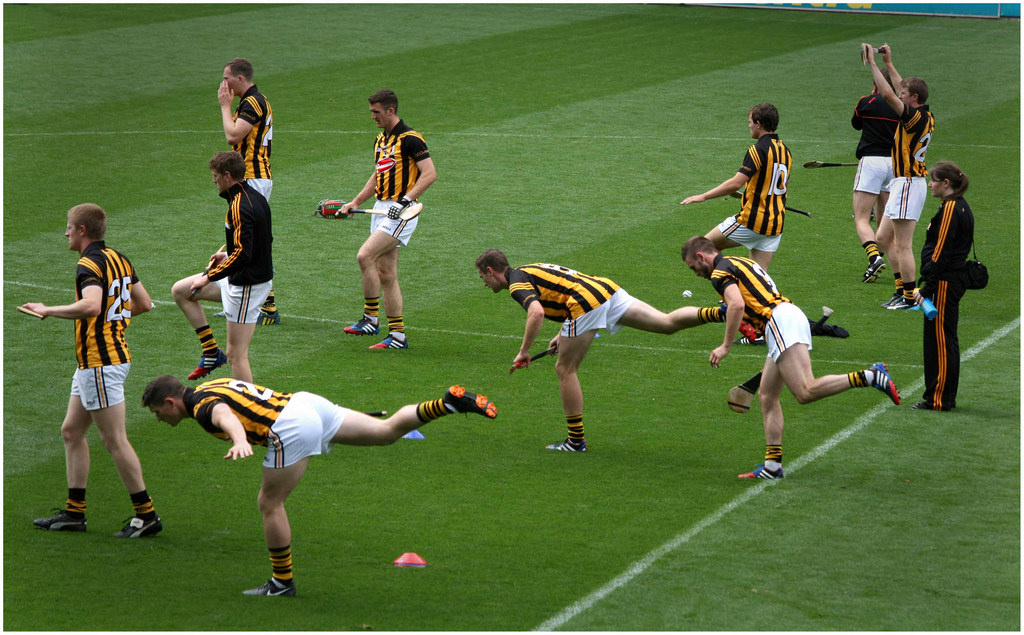
Alright this topic is one that really gets me fired up because a lot more people go wrong here than right, or they just don’t warm up at all which is worse.
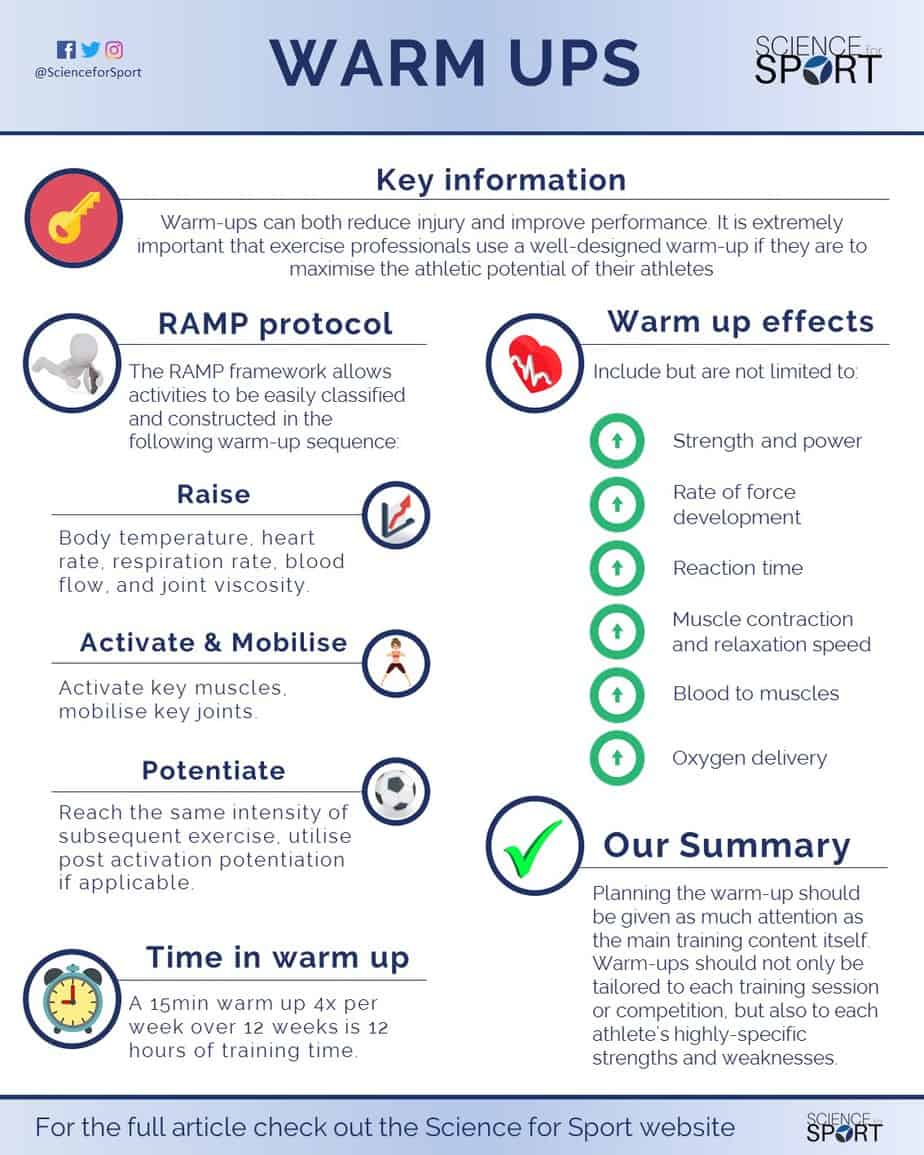
A warm up can be summed up in one word; RAMP.
Raise
Activate
Mobilise
Potentiate
We’re going to discuss each of these, along with the do’s and don’ts of each before pulling it all together so you can go out and be able to warm up properly for games, training and workouts.
What does a Warm Up need to do?
Like I said a proper warm up needs to do four things:
- Raise your heart rate
- Activate the main muscle groups you’ll be using like your glutes and/or your shoulders
- Mobilise joints and their surrounding muscles to increase range of motion
- Potentiate or prepare your body and mind for the workload its about to get.
This might sound like a lot and it might sound complicated at first, but its really not. A good warm up can be achieved in as little as 10-15 minutes.
A lot of people skip the warm up because they don’t know what to do because no trainer or coach ever explained to them what they need to do. So, what happens a lot is to get ‘warm’ players jump straight into intense running and jumping to get the blood going and get warm. Sure, this is fine because your getting ‘warm’ but your body isn’t actually getting prepared to play and perform at its best. Eventually your body will break down and get injured if you don’t give it the respect it needs.
You don’t turn on a blender full blast and start throwing food in it to make a smoothie. Sh*t would go everywhere, you’d probably break the blender and you’d look like an idiot. So why do it to your body?
So with the lecturing out of the way, lets talk about HOW to actually warm up:
Phases Of Warmin Up:
Phase One: Raising Your Heart Rate:
This is the simplest bit and the bit we all understand how to do. We have to raise our heart rate gradually to reduce a massive spike in the load our heart is going to be taking on. Exercise is very taxing on our bodies and our hearts bear the brunt of the load. A spike in our workload means our heart needs to get more blood and oxygen around the body which is a taxing job. So by gradually raising our heart rate over 5-10 minutes instead of jumping straight in to sprinting and jumping or lifting, we’re preparing our heart to get more blood around the body, by increasing our breathing rate to take in more oxygen and by increasing our blood flow around the body so we can do more work.
If your in a gym you can do this by 5-10 minutes of a light jog, biking or rowing machine etc.
On a field or court or athletic work like running, sprints etc. this phase would consist of skips and bounds like A/B skips, high knees, lateral skips, butt kicks etc. Just a couple of sets will do the job to get the heart rate up. The key with skipping series is to gradually increase the intensity of them as a way to increase the workload. So things like single legs bounds can be quite a low intensity exercise and don’t take a lot of thought, whereas B skips can be quite complicated to think through, so work up the intensity mentally and physically.
You need to gradually increase muscle and tendon tissue temperature to avoid injuries and loosen out stiff muscles and joints and to get the synovial fluids flowing around the joints. PLEASE don’t do something stupid like intense plyometrics like box jumps and sprints or start off running full pelt.
I like using skips and bounds because they put muscles and joints through a slightly exagerrated range of motion, acting as a kind of mobility drill also, like high knees for example. No one runs like that, but its great or opening up your stride and hip flexors. So soft tissue plyometric work/ skips to warm up for runnning/sprinting/ sports or a cardio machine in the gym.
Your only trying to warm up so a light sweat is all you want, not heavy breathing and covered in sweat like Game 6 Michael Jordan.
Phase Two: Activating Muscle Groups
Those who go to the gym tend to be better at this than others, but its slowly catching on as a must-do aspect for sports players and athletes. We need to prime muscles to recruit more of something called motor units, the number or muscle fibres active to allow muscles to perform better and do more high output work like jumping and sprinting.
You need to activate and get the big muscle groups primed for action. The three to focus on are the glutes, the shoulders and the core.
Any sport the involves the legs heavily involves the glutes. There the biggest muscle group we have and they are the primary movers when it comes to jumping and sprinting. Getting the glutes primed allows them to take on the huge load there supposed to take on. If they are not active enough other muscles are forced to take on a load they shouldn’t have to, for example with basketball players the quads will try take on the load of the glutes because they aren’t doing enough, causing the quads to become almost over active, tight and worn out leading to bad biomechanices and injuries.
That’s how I got tendinitis in both of my knees, so don’t try argue its not important.
Resistance bands are great for this part. Get a band and put it around your knees and perform things like lateral walks and duck walks until you feel the burn, then go slightly past it. Do the same with your Glute Medials, the small muscle group on the side of your hip that keeps your knee pulled in place so you don’t go into valgus (knocked knees). Exercises like clamshells are great here. Again go until they burn and slightly past it to really get them active.
If you don’t have a band just yet, glute bridges, squats and reverse lunges will also do the trick, but bands work better.
Heres a video with a few examples of good band exercises:
The shoulders are one a bit more specific to sports that involve throwing like basketball, hurling or GAA, or for upper body gym sessions.
There the main joint when it comes to moving anything with the upper body so getting them primed is extremely important, especially for basketball players who play and shoot all with the shoulders. Getting these muscles activated and ready for action cuts out that 10-15 minutes spent bricking shots trying to get loose and warm. So why not do it and increase your shooting percentage and work output?
Finally our core is involved in every movement we make. Its the first muscle group to become active when we go to move. So, by getting it turned on and active we can react quicker and move quicker and lift heavier. Now, I’ll be honest I only use core warm up exercises for gym and lifting work, not for field work or running etc. The main one to focus in on is getting the glutes active, but sometimes getting the core involved doesn’t hurt. Planl variations like shoulder taps and Up Downs and great here.
Phase Three: Mobilisation
Getting joints and muscles mobile can also sometimes be part of getting them activated. I mean if your going through a series of lunges and squats and toe touches you are opening up the hip joints and putting them through their range of motion, like the example I gave with the high knees.
The key here is to keep everything dynamic.
NO STATIC STRETCHING. AT ALL. I MEAN IT.
Holding a stretch decreases the elasticity of the muscle. You wouldn’t stretch out a spring fully and then still expect it to be springy would you? No you wouldn’t. Holding stretches reduces overall performance. Think of it this way, you’ve worked up a sweat, primed muscles, and now your going to hold stretches and let you heart rate and central nervous system slow down and relax before trying to get going again? Your warming up to heighten your nervous system to be able to jump higher and run faster like a spring off the ground, not dough slapping off of a counter.
No to mention static stretching decreases your bodies ability to absorb force by as much as 10% which puts you at a higher risk for injury. So just don’t do it, okay?
If a muscles is really tight, try foam rolling it instead. Foam rolling can increase range of motion in a muscle periodically without any negative performance consequences.
So for sporting activities I love to use a warm up from Paul Fabritz of PJF Performance because it raises the heart rate, primes muscles and goes through dynamic mobility stretches to get you set to run, jump and sprint. If Paul is using it, then you should be too.
For gym work I like to focus more on thoracic mobility with like thoracic extension, cat/cows and thoracic rotation etc. to get my shoulder mobile and in a better position to lift weights. Its a good idea aswel to focus in more on joint mobility exercises like 90/90’s for the hips and ankle dorsiflexion exercises along with dynamic stretches from above for squatting and leg day movements.
Moving, running and lifting feels a lot more fluid and free once you’ve got yourself mobile because you’ve oiled up the joints and warmed up the engine. Your more or less ready for action both mentally and physically.
Phase Four: Potentiation
This phase is more specific to gym work, plyometric work and high intensity work.
Basically it’s just building up to the intense exercises and activities your about to perform. So say for a heavy squat day you work up the weight or you build up the intensity of the plyo’s or the speed at which your sprinting or height your jumping.
You want to build up to intensity you’ll be exercising/playing at. You don’t just walk in and start dunking or you’ll end up on Lowlights Instagram paged after being blocked by the rim.
The same goes for lifting. Use pyramid sets to build up intensity. So like start of with 10 reps empty bar, then 8 with 40 kg, 6 with 60 kg, 4 with 70 kg, 3 with 75 kg, 2 with 80 kg and 1 with 85 kg. You want to be about 15-20 kg short of your working sets, which for this example was 100 kg. This progression again acts to prime the body for the lift, activating muscles and recruting motor units.
In the end you’ll lift heavier jump higher by building up to it rather than trying to jump straight in.
Putting it all together:
A proper warm up to reduce injuries, increase performance and prepare you mentally can be achieved in as little as 10-15 minutes.
By following the RAMP method you will fully prepare your body to exercise or to perform.
So heres how I structure my warm ups:
A) Gym Work:
- 5-10 minutes light cardio to break a sweat
- Activate my glutes, shoulders and core with resistance band/bodyweight work
- Go through dynamic stretches and mobility exercises
- Do pyramid sets to warm up to my main lift of the day
That takes me roughly 15 minutes to complete and when I get to my first working set I am fully prepared mentally and physically to go.
If I have plyometric work to do aswell, I build up with lower level plyos and tissue work, which is something I’ll get into in another blog because plyo’s are a whole other topic.
B) Court/Field (Sports) Work/Running/Sprinting Work:
Personally, I prefer to do my activation work first here before I go through my skips series because I like to feel my glutes active before I start jumping and moving. When it comes to basketball and football or any kind of running I don’t like to jump straight into running and light jumping. I like to do my activation and then start getting my heart rate up. Thats a personal choice from playing arounf with different warm ups, so maybe try it out yourself aswell if you find it hard on your knees to start off jumping and moving straight away when your cold and stiff.
- Glute activation with resistance bands/ Shoulder activation if necessary
- Skipping series and low level bounds
- Dynamic stretching/mobility movements like in the PJF Performance video
- Higher intensity jumps and bounds to prepare if I’m doing more intense work like sprinting and jumping.
This warm up takes roughly 10-15 minutes. I do it every time I’ve a game or a workout and it always gets me revved up and ready to. Its the warm up I put my players through aswell because I know it works.
Like I said warming up properly can give you that edge you need to get you revved and physically and mentally. Mess around with different mobility exercises and activation work and you will find a way you like to do things that will work for you. And remember its just a warm up, get yourself prepped but don’t go overboard and turn it into a mini workout.
And what ever you choose to do,
NO STATIC STRETCHING!
Hope this helps,
Aaron.
 Silent Grind Performance
Leave a comment