
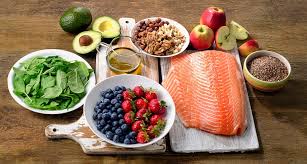
What you eat everyday can be the deal breaker between good health and bad health, good performances and bad performances. In this post I want to lay out for you the basics of a good diet and how your diet needs to be structured in order to accomplish your goals.
In the future we’ll get into sports nutrition but for now let cover the basics of good nutrtition and fuelling our bodies.
Nutrition: What is it and why do we need it?
Nutrition: The process by which an organism obtains and uses food for health, growth and nourishment.
Its the simple really, nutrition is just how we use the energy we get from food to help us grow, repair and keep our bodies healthy. Combined with exercise, good nutrition habits can help you maintain a healthy weight, reduce the risk of diseases (like heart diseases, cancers, digestive problems, diabetes) and promote overall well being.
For an athlete trying to make it to the top of their game, good nutrition can be the deal breaker. Having good nutrition habits can help athletes recover faster, get stronger and faster, last longer and be more durable along with improve decision making abilities and much much more.
It doesn’t matter how much hours you put in to your sport or how good your gym program is if your not putting the same energy and effort into nourishing your body the right way.
You can’t put petrol into a diesel car and expect it to work perfectly. Its going to break down sooner rather than later, and the damage could be catastrophic. Your body is the exact same.
This is where all those fad diets and programs and influencers love to make thing really confusing; what actually makes for a good solid and healthy diet.
Well I’m going to lay it all out here now.
Get Your Nutrition From Good Food Sources:
Nothing can beat getting your nutrition from good and real food sources.
A good balanced diet will 9/10 supply your body with all the vitamins, minerals and macronutrients.
We’ve all gone mad today to take supplements to make up for our bad diet habits like using protein powder instead of eating meats or other protein sources, or different multivitamins to make up for a lack of vitamins and minerals absorbed from vegetables and fruits.
But, let me let you in on a secret;
A good balanced diet will 9/10 supply your body with all the vitamins, minerals and macronutrients.
With a few small changes in your diet you can actually get all the nutrients you need from food without the need to spend money on supplements and protein wheys.
3-5 servings of a protein source a day like chicken, milk or even eggs will make up the daily protein intake for most athletes. So say you have cereal with milk for breakfast, pasta and chicken for lunch, scrambled egg on toast for tea and maybe a small bowl of cereal and milk as a snack at night, your going to have eaten all the protein you need for you body for the day. You don’t need to chug 3 protein shakes along with that!!
Our bodies only need a certain amount of protein daily, roughly 1 gram per pound (lbs) of bodyweight. Anything over that our body has to break down and get rid of because its actually poisonous for your body. So, find out how much you need and only eat that, eating more than you need won’t make you grow muscle faster, it will just be a waste or food and money!
The same goes for carbs, 3-5 (5-7 for athletes) will supply you with all the energy you need to fuel workouts and games. Eating a little bit more carbs than needed for really active athletes isn’t a bad idea because of the amount of energy you will use and burn off, but theres still no need to go overboard. Theres no need to be eating rice three times a day, all of that unburned excess carbs gets turned to glycogen and stored in the body as ‘fat’, or like a reserve of energy and if you don’t burn it off it will add up and thats how you gain weight and not the good kind.
And remember, not all carbs are the same. We want mostly slow-releasing carbohydrates, like starches, so we can have long-lasting energy over a couple of hours, not sugars and refined carbs which will give us a quick energy boost only to crash and burn out after a couple of minutes.
The same goes for fats. Our bodies needs fats for things like energy and heat and many other things. But there are good sources and bad sources. Getting your fat for eating a normal diet with meats and dairy will give you the fat you need. You don’t need large amounts of it, but you do need it, so don’t be afraid to eat fats!
Finally 5-7 servings of fruits and veggies a day will provide you with all the vitamins, minerals and fibre your body needs. Vitamins are super important because they act as catalysts (make reactions happen in our bodies) so we can absorb nutrients and use them in our body.
That leads me on to my next section, adjusting what you eat to your goals.
Adjust Your Nutritional Needs To Your Goals:
Depending on your sport or your position or your goals you need different things from your body and different things from your nutrition.
A) ‘Bulking’ :
Maybe your move up a division or age group and you need to gain some muscle mass to be able to compete physically and not get pushed off the ball or easily knocked off balance by defenders. So here your food intake needs to be geared towards ‘bulking’. Basically how bulking works is you eat more than you actually burn off so your body has more fuel to build more muscle.
But that doesnt mean its a free-for-all and you can eat whatever you want. No, because thats how you get fat. The best way to bulk is to follow the ‘Lean Bulking’ method, where you stay as lean as possible while building as much muscle as possible. Your body will gain the same amount of muscle from a 30% caloric surplus as it would from a 120% caloric surplus, the only difference is with a 120% caloric surplus you’ll gain a lot more fat on top of all that muscle, which is just annoying because you’ll have a lot of excess fat to lose at the end of your bulk, which is a big L.
So, if you plan on bulking, heres how I suggest (briefly) you go about it. We’ll probably go over it in more detail in the future:
- Plan for a 3-4 month bulk. Anything over that will just be hardship. You’ll gain roughly 5-7 kg (maybe more your athletes with a younger training age) in this time frame.
- Increase your caloric intake by about 250 calories at a time. So if you eat 2,500 calories, up it to 2,750 until your weight gain stalls and then up it by another 250 cals. For me I gain about a kg every 4 weeks before my weight gain would slow and I’d have to up my calories. But really milk every time you add another 250 cals, this is how you minimise excess fat being gained.
- Your body needs energy to build more muscle, not larger amounts of protein. So make sure your getting your extra calories mainly from carbs and some from fat. Your protein intake shouldn’t be making up for the extra calories.
- Finally, and not really a nutrition tip but make sure your hitting the gym hard so those extra calories are being used to build muscle mass and not being stored as fat!
B) ‘Cutting’ :
So maybe your on the opposite end of the spectrum and its excess body fat you need to lose to get that bit quicker on your feet or your coming out of a bulk.
- Here would be a good time to eat a bit more protein than you need to maintain your muscle mass so your body doesnt try to decrease it instead of burning off body fat.
- Plan for a 2-3 month cut. Don’t go crazy and try to lose lots of weight in a small time frame, this has lots of possibly detrimental effects, like drastically increasing your risk to injury because your body is weaker and low on energy and many other bad things!
- Cut your calories by about 250-500 cals at a time and just like a bulk, this deficit is taken mainly out of your carbs. And just like bulking, really milk how much you can lose from as few cuts as possible. the higher you can keep your calories during a cut the more your body will thank you for it.
- Finally, make sure your getting in lots of colourful fruits, veggies and salads. In general, the more colourful your meals, the more different vitamins, minerals and micronutrients your getting into your body during a stressful time for your body during a cut. All of these micros will really help keep your body healthy!
Rob Lipsett actually has a great video explaining cutting and all the ins and outs which I would highly recommend you watch before doing anything crazy.
C) ‘Maintenance’:
So for the majority of the year this is the phase your nutrition should be in, simply just staying a a healthy bodyweight for your body. Everyones bodies are different and their metabolisms are different. For some people their bodies want to stay naturally leaner than most people because of a high metabolism whereas some peoples bodies might operate more efficiently a small bit heavier. For example my body wants to sit around 12-13% bodyfat naturally, which makes me look lean but not ‘shredded’. If I was to try stay leaner all year round my body would pay a price in injuries and get sick a lot more often.
Without making things complicated, the easiest way to ‘maintain’ is to just eat a healthy and well balanced diet, not forcing yourself to eat more or less than it wants. Your body will figure the rest out.
Remember, a good diet will always trump every other kind of diet.
The Macro Lifestyle:
For those of you who maybe want to take things to the next level with your nutrition and make sure your body is really getting everything it needs I’m going to now cover how to track your calories and macronutrients to so you can make sure your body is getting the right amount of protein, carbs and fats you need!
In my opinion tracking what you eat for calories and macros daily is something everyone should try for a while, even if you’ve no interest in doing it forever. Its a great way to see exactly what you eat and put into your body and its a great way to learn what is in food, for example if its high in fat or sugars or whatever. Personally, tracking my macros really deepened my understanding of nutrition in a really short space of time.
So basically, macronutrients are the main nutrients your body needs in order to give you energy and to function and like I said your body only needs a certain amount of them daily and the good news is you can calculate them really easy. There are plenty of Macros calculators on the internet like this one from Legion Athletics which are super simple to use. Legion Ahtletics also have a full in depth guide of macronutrients and how to use them.
Macronutrients are especially important for athletes because a calorie isn’t just a calorie. Our bodies need different types of nutrients for different things; carbs and fats for energy and protein for building muscle and recovery. Simply just eating enough calories wont cut it, we need to be using our calories to get the right sorts of nutrients .
Thats why in my opinion Macros > Calories. Don’t @ me.
If your like me and you don’t trust the online calculators and want to calculate your macros yourself, heres a quick and easy way to do it.
- Calculate your maintenance calories by multiplying your bodyweight in lbs by 14-16. 14-16 is a scale, with 14 being a less active person and 16 being an active person (like an athlete). So say your an athlete or your still young where you need more food than most people and you weigh 145 lbs, multiply that by 16, which give 2,320 cals, which is his maintenance calories. If you were to bulk or cut, this is the number you’d add or take away from.
- Now, let calculate your daily protein intake. So take what you weigh and multiply it by 1-1.5. Some people like a little bit more protein than others, some like less, but for the majority of sports players stay inside that 1-1.5 bracket. So again for some who weigh 145 lbs, multiplied by 1 equals 145 grams of protein.
- 1 g of protein equals 4 calories, so multiply your grams intake by 4 to get the amount of calories your protein intake will equal and take it away from your total calories. For example 145 x 4 =580. 2,320 – 580 = 1,740 calories remaining.
- Next you have to calculate your daily fat intake. To do this, take your weight in lbs and multiply it by 0.3-0.4. For people who play sport I would recommend staying on the mid to highet end of this scale, roughly around 0.35 to 0.4 so you still get a healthy fat intake. Remember your body still needs fats for lots of important things like heat and energy so don’t just demonise it eat as little as possible, its just as important as protein and carbs. So 145 lbs x 0.4 = 58 g of fat daily
- 1 g of fat is worth 9 calories, which is why high fat diets lead to weigh gain because its so calorie dense and for athletes this is a problem because it doesn’t provide enough useable energy as carbs. Fats have to be broke down before they can be used by the body, which means the body has to burn more energy to make them useable whereas carb sources like pastas are a lot easier to access for energy than fats! So 58 g of fat x 9 cals = 522 cals, 1,740 – 522 = 1,220 cals left.
- Finally, to get your total grams of carbs you should eat daily, divide the number of calories left by 4 (the number of calories per gram of carbohydrates). So for this 145 lbs person, 1,220 cals divided by 4 = 305 g of carbs daily. And thats it, simple right?
At first it might be hard to hit those numbers because it seem like not a lot of food or eating more carbs than you used to and less fat might be a hard task and making adjustments to what you eat can be hard. It takes more thoughtful choices and more planning, but it is worth it. Finetuning your diet can really be the difference maker in your performances. Apps like Myfitnesspal make it really easy to track your macros. All you do is enter your macros and search for the food you eat on their massive database of foods, making tracking simple and easy.
Your diet and nutrition can be the one thing that can give you an edge over competition now and long term. Too many talented athletes fill their bodies full of crap right now because there not losing athlecism or gaining weight, but eventually they will break down either by injury or burn out because there body doesnt have the fuel to recover properly. Meanwhile if you take care of your nutrition you can train and play harder and for longer because your body is fueled for it.
Don’t make that mistake, get what you eat in order now and gain that edge.
 Silent Grind Performance